
Within the framework of the nine core pillars of game design, the third pillar, Systems & Mechanics, represents the point where theoretical experience goals become practical implementation. While earlier pillars define what a game aims to make players feel or understand, systems determine how these goals materialize through rules and interaction. In many modern titles, the combat system becomes the primary interface through which players engage with challenge, mastery, and progression. Its structure directly influences engagement, retention, and the long-term sustainability of player interaction.
This analysis does not approach combat from a purely creative or aesthetic standpoint. Instead, it examines combat systems as structured design constructs, breaking down how decision-making, feedback, balance, and mechanical consistency shape the experience of conflict in games. The goal is to clarify how combat experiences are systematically built, evaluated, and sustained within game design frameworks, offering insight into how such systems succeed or fail over time.
Combat System as a System in Game Design
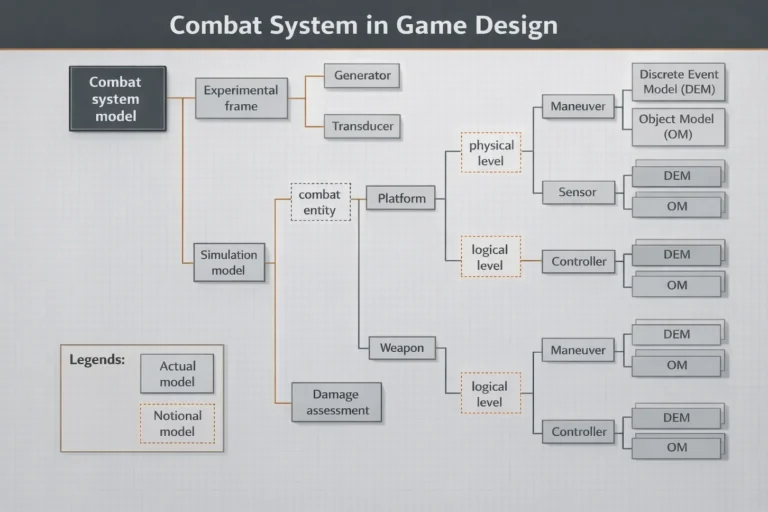
At a technical level in game design, a combat system is a closed yet dynamic rule set that defines how players and opponents interact under conflict conditions. It includes definitions of actions, limitations, timings, power variables, failure states, and feedback mechanisms. It is not emotion, pacing, or audiovisual presentation. Those are results of the system, not the system itself.
A well-designed combat system behaves predictably without becoming mechanical, allows skill improvement without requiring memorization, and enforces boundaries without removing player agency. When the system fails, failure is often attributed to the player, while the real cause lies in inconsistent or unclear rules.
Player Actions and Verb Space in Combat
The foundation of every combat system is the set of player actions available, commonly referred to as the verb space. What matters is not just how many actions exist, but how they combine, when they are available, and what cost they carry. Each action is defined by input, execution, timing, outcome, and constraints.
A system with many actions but no hierarchy or clear usage conditions becomes noisy. Conversely, a limited verb space with clearly differentiated roles can produce greater depth. Choosing between light and heavy attacks, for example, is not merely a damage difference but a trade-off involving commitment time, risk, and spatial positioning. The combat system must make these distinctions functionally readable, not merely theoretical.
Enemy Design as an Extension of the Combat System
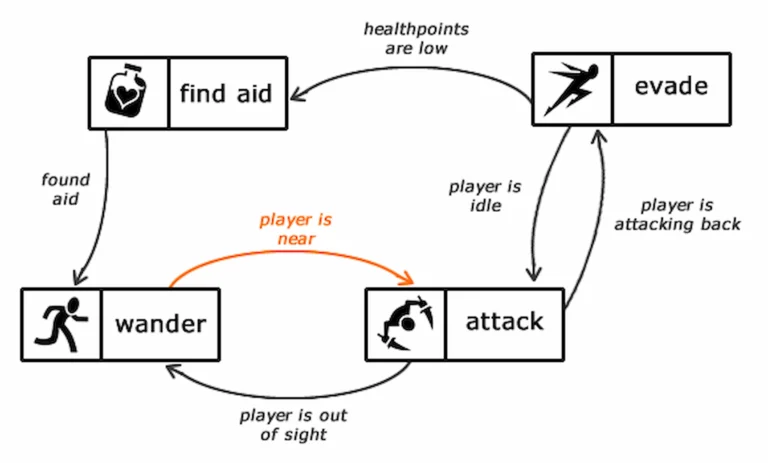
Enemies are not simply obstacles. They serve as the active interface through which the combat system is tested. Their behavior, attack patterns, vulnerability windows, and reactions to player actions determine whether the system generates meaning or merely friction.
Enemy design based solely on increased statistics undermines the system rather than strengthening it. Qualitative behavioral variation, such as stance changes, pressure patterns, or conditional reactions, instead forces meaningful decision-making. The player learns not merely how to win, but how to read the system.
Damage Model and Numerical Meaning
The damage model forms the mathematical backbone of the combat system. It concerns not only how much damage is dealt, but how it scales, how it is mitigated, and how it is communicated. The relationship between damage, health, armor, and mitigation should be understandable at the outcome level, even if the underlying numbers remain hidden.
When players cannot explain why they died or why they succeeded, the system fails in communicating information. A balanced damage model allows small mistakes, punishes consistently poor decisions, and rewards proper execution without relying on abrupt difficulty spikes.
Risk–Reward and Strategic Choice
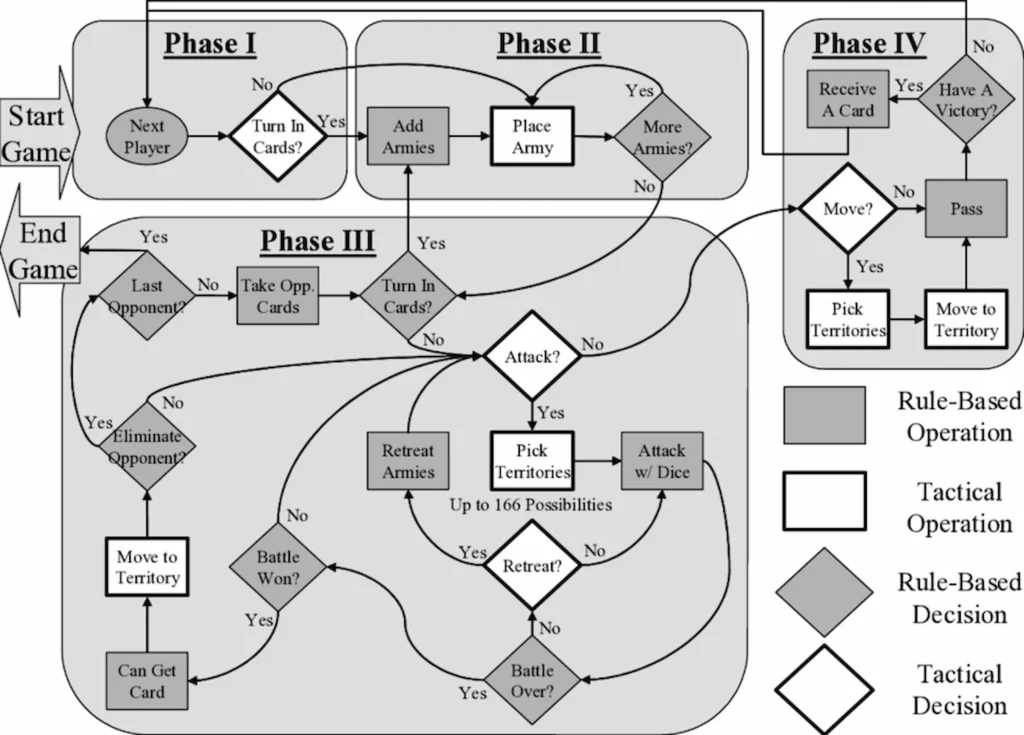
Every combat system in game design, must incorporate mechanisms of risk and reward. Strong actions alone are not enough; there must be reasons not to use them constantly. Risk may arise from exposure time, resource consumption, vulnerability windows, or future consequences.
Without meaningful risk–reward trade-offs, combat degenerates into routine optimization. When powerful options carry clear costs, players must evaluate context rather than repeat the most efficient move.
Feedback and Combat Readability
Feedback is not decorative; it is functional. Players must understand what happened, when it happened, and why. Visual, audio, and haptic feedback cooperate to transmit information in real time.
When feedback is unclear, challenge feels unfair. When excessive, clarity is lost. An effective combat system provides sufficient information for adaptation without removing the need for observation and judgment.
Pacing, Encounters, and Long-Term Fatigue
Combat systems do not exist in isolation. Encounter pacing, battle duration, and intensity variation directly affect long-term sustainability. A system enjoyable in short bursts may become exhausting when repeated without variation.
Good encounter design uses the combat system to create intensity curves rather than constant noise. While this connects to flow and experience pillars, it originates in the structure of the system itself.
Failure States and the Learning Loop
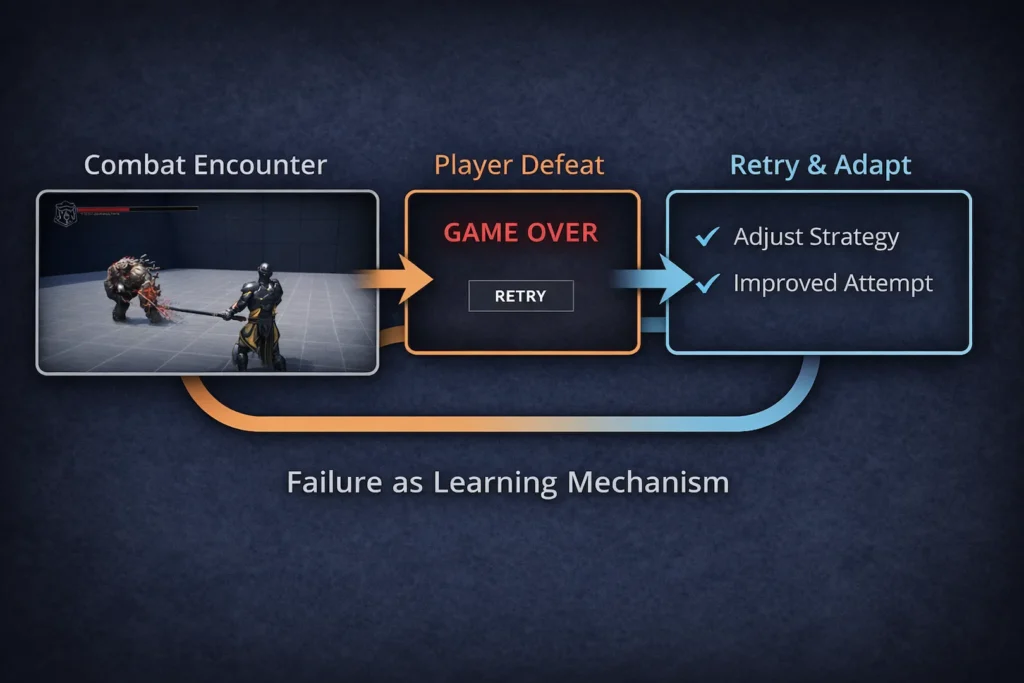
Failure is an integral part of combat. How the game handles failure determines whether players learn or disengage. A good system allows players to understand mistakes without requiring external knowledge.
Defeat should function as feedback, not punishment without explanation. When players can connect failure to specific decisions or execution errors, the combat system fulfills its educational role.
Combat States, Timing, and Frame Logic
Every combat system operates through a network of states defining who has control, when, and under what conditions. States such as idle, active, recovery, stagger, knockdown, invulnerability, or hit-stun are not merely technical implementations but design decisions affecting fairness and clarity.
Transitions between states create the feeling of responsiveness. Canceling from attack to defense, for example, reflects design philosophy rather than convenience. It determines whether commitment or correction is rewarded. Recovery windows similarly dictate whether actions feel risky or safe.
Frame logic quantifies this philosophy. Startup, active, and recovery frames define precisely when actions are dangerous, effective, or punishable. In real-time combat, differences of only a few frames can completely change strategic viability. Input buffering and queueing further influence whether the game acknowledges player intent even when immediate execution is impossible.
When these systems lack consistency, combat feels unfair. When tuned well, players feel the system responds even when they lose.
Spatial Design, Camera, and Physical Readability
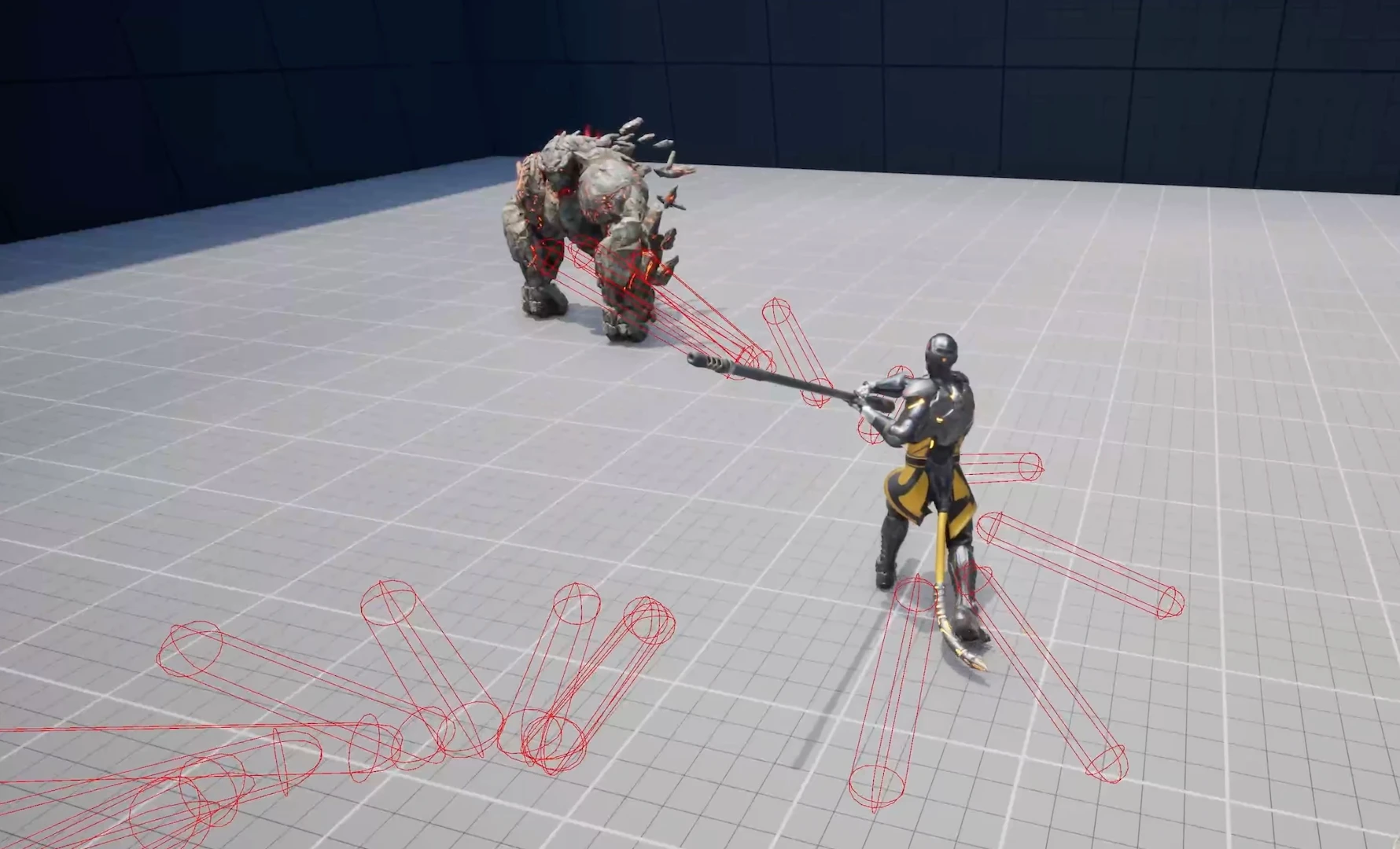
Combat unfolds not only in time but also in space. Player positioning, distance, and environmental geometry are active components of the system. Hitboxes and hurtboxes are not just technical collision tools but communication mechanisms of precision. When visual representation misaligns with actual hit detection, system credibility collapses.
Spatial logic extends to camera behavior. Viewing angle, zoom, auto-targeting, and threat prioritization directly influence decision-making. A theoretically strong combat system can fail practically if the camera obscures critical information or disorients players during intense moments.
Battlefield layout also functions as a system modifier. Narrow spaces, elevation differences, obstacles, and chokepoints are not scenery but active influences. When spatial design ignores player movement and combat capabilities, friction emerges from incompatibility rather than challenge.
Progression, Exploits, and System Degradation
Combat systems must endure over time. Progression mechanics such as abilities, upgrades, and scaling gradually reshape combat balance. Without foresight, systems either become trivialized or overly punishing.
Exploits and dominant strategies inevitably appear in complex systems. When one option consistently outperforms others, combat shifts from decision-making to optimization. Designers should not eliminate every exploit but understand why it emerges and whether it aligns with intended playstyles.
System degradation occurs when progression or repetition drains tension, turning combat into routine execution. Causes include power creep, excessive resource access, or lack of new systemic pressures. Robust systems anticipate this evolution and introduce mechanisms that restore the need for adaptation.
Combat System Within the 9 Pillars Framework
Combat systems do not operate independently. They connect directly to pillars of challenge, progression, feedback, and agency. A combat system disconnected from the overall game design vision feels inconsistent, even if technically solid.
Its quality is measured not only by functionality but by how clearly it serves genre, pacing, and experiential goals.
Conclusion
A high-level combat system is not the result of inspiration alone, but of structured systemic thinking. It emerges from the careful alignment of rules, feedback, player choices, and consequences into a coherent framework that supports learning, challenge, and long-term engagement.
When constructed effectively, combat disappears as a visible mechanism and instead becomes a space where players focus on decisions, adaptation, and mastery. When poorly structured, it becomes the most noticeable and frustrating aspect of the experience.
Analyzing combat systems at this systemic level allows developers, analysts, and production teams to better identify friction points, anticipate balance issues, and understand how mechanics evolve over long play sessions. Combat design ultimately succeeds not by adding complexity, but by organizing interaction into a readable, consistent, and sustainable decision space.
And for this reason, combat systems remain central to understanding how the third pillar of game design translates theory into playable reality.