
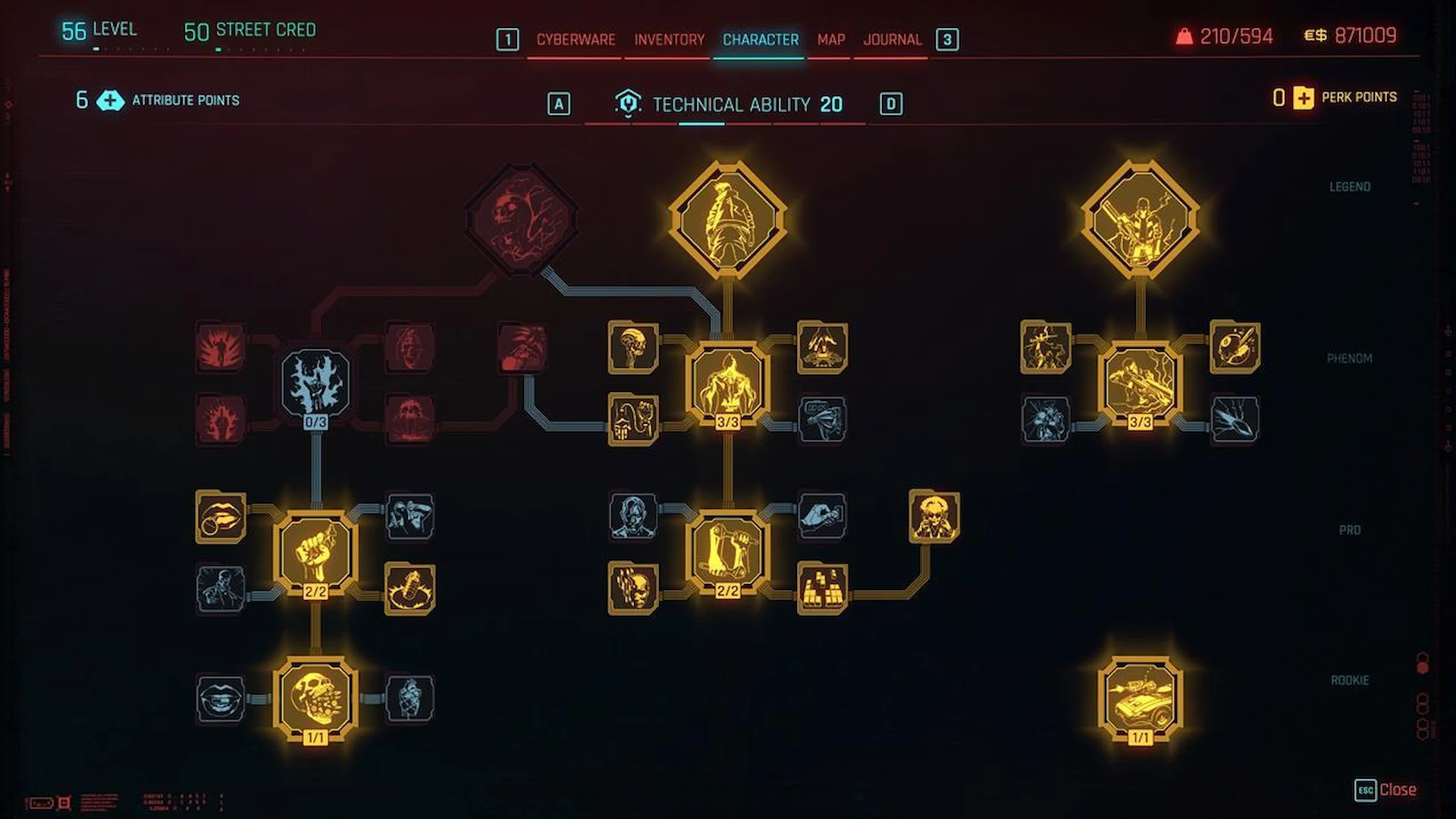
The progression system is one of the most decisive mechanisms in modern game design because it directly shapes how a game sustains duration, creates a sense of development, and gradually transforms the player experience over time. Although it is often immediately associated with levels, experience points, or skill trees, its actual meaning is significantly broader and far deeper than simple numerical advancement. Regardless of genre, whether in an RPG, an action-adventure title, or a strategy game, the way a game chooses to evolve the player, reveal new capabilities, and gradually alter the relationship between the player and the world itself is a fundamental design concern.
Within the framework of the nine core pillars of game design, progression belongs to the third pillar, Systems & Mechanics, where we have already examined components such as combat systems, traversal systems, economy systems, and AI behavior systems, meaning systems that determine how the experience operates at a mechanical level. The progression system addresses a different need. It is not only about what the player can do at a given moment, but about how that changes as the experience unfolds.
This is also where one of the most common misconceptions around progression design appears. In many games, progression is treated superficially as a level system, a skill tree, or a sequence of rewards triggered at fixed intervals. In reality, however, progression is much broader. It is the way a game controls the feeling of development, regulates content disclosure, and determines whether the player genuinely feels that they are moving through an experience that evolves.
When designed correctly, progression is not measured only numerically. It is not simply about increased damage, new equipment, or access to an additional area. What matters is whether the nature of decisions changes, whether the player’s interaction with mechanics evolves, and whether the game itself gains new depth through that evolution. This is where the true significance of progression begins in contemporary game design.
What Progression System Means in Game Design
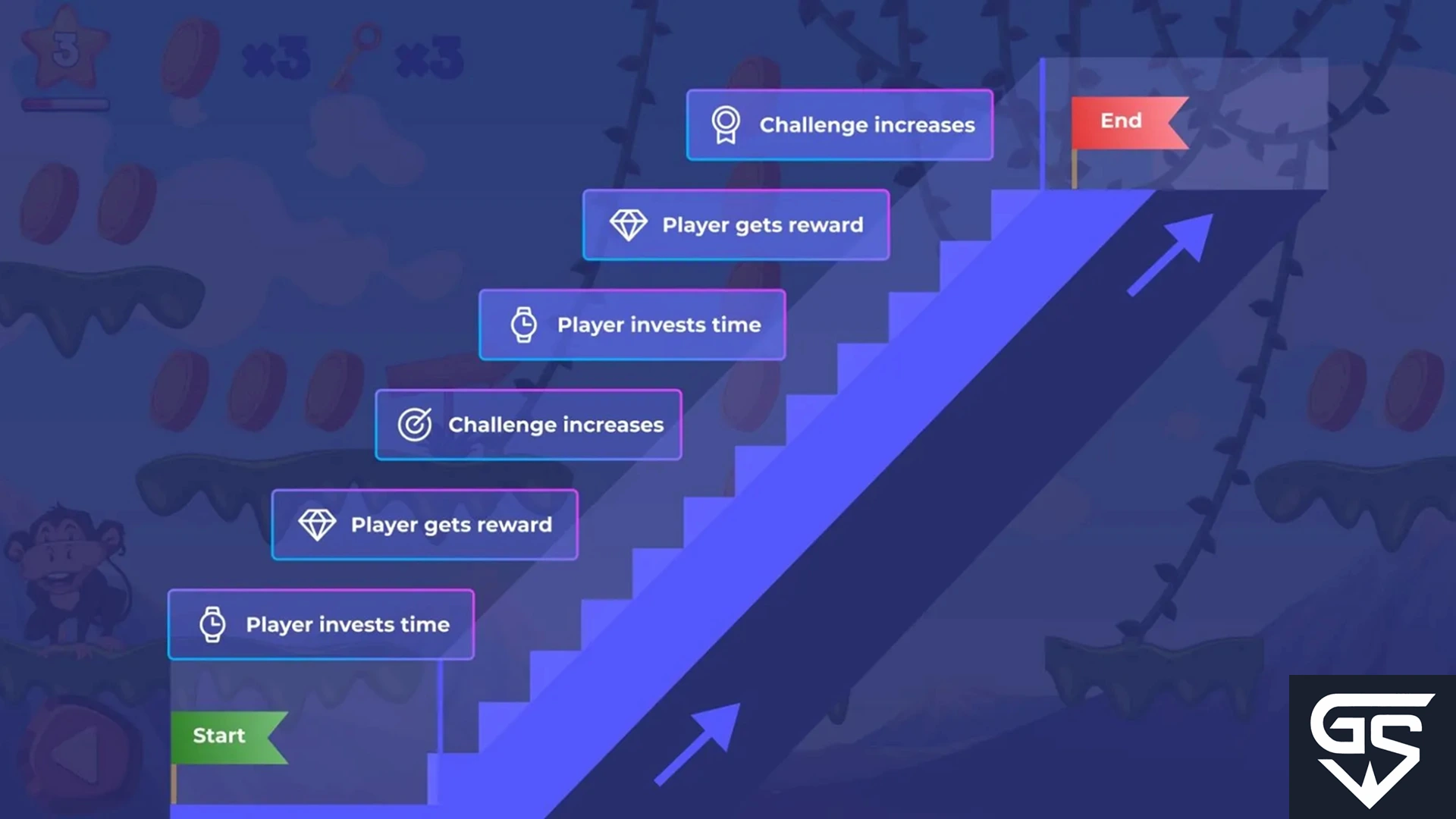
A progression system is one of the most important structural mechanisms in game design for any title that aims to sustain duration, deliver a sense of growth, and gradually reshape the player experience. While it is often automatically linked to levels, experience points, or skill trees, its meaning extends far beyond simple numerical increase. In design terms, progression describes how a system organizes player development over time. It is the controlled pace at which new abilities, new areas, new rules, new choices, and new demands are introduced. In other words, progression is not simply about what the player gains, but about how the game gradually changes its own relationship with the player.
This can take many forms. In some games, progression is directly tied to numerical strength, such as increased damage, health, or defensive values. In others, progression is expressed through new abilities that alter movement, combat, or environmental interaction. There are also cases where progression is not delivered through numbers or unlocks at all, but through knowledge, when the player gains deeper understanding of the system itself and that alone transforms the experience. For that reason, a progression system should not be viewed merely as a reward structure. It is not simply a chain of rewards confirming that the player invested time. It is an architectural mechanism of experience because it regulates when the game allows greater power, when it introduces more complexity, and when it moves the player into a new level of systemic demand.
In mature examples of game design, progression functions as an internal mechanism of transformation. A player in the first hours of a game and a player in its final phase may technically interact with the same systems, yet in practice they experience entirely different versions of them. Their available options, strategic margins, tool access, and required thinking have already shifted. That is the core of progression. It is not designed to fill time. It is designed to ensure that the experience remains alive, that repetition does not become stagnation, and that every new phase introduces genuine differentiation rather than simple extension.
Why Progression Is Critical to the Overall Player Experience
A game may have excellent combat, strong level design, or impressive atmosphere, but if the sense of progression is not properly supported, the experience eventually begins to lose momentum. Progression is what sustains the perception that the player’s invested time translates into meaningful transformation rather than repetition under a different surface. Its importance becomes visible very early. From the opening hours, players look for signs that the game will not remain static. They want to perceive movement, new possibilities, and increasing depth in their relationship with the systems. If that feeling is absent, even a strong core gameplay loop begins to lose strength because the system no longer generates anticipation.
This is where progression acts as a mechanism of retention. It does not only reward previous effort, but creates motivation for what comes next. Players continue because they know, or at least expect, that something ahead will meaningfully alter the experience, whether that means a new ability, a new strategic layer, or a point where the game itself begins to demand something different. Poor progression almost always leads to stagnation. When a game’s mechanics remain functionally unchanged for too many hours without meaningful variation, players begin to perceive the structure behind the experience too clearly. At that point, repetition stops feeling like mastery and starts feeling like mechanical exhaustion.
By contrast, in a well-structured progression system, each new phase changes the player’s relationship with the same mechanics. The player does not simply acquire more tools, but is forced to reinterpret what they already know under new conditions. That is also why progression directly shapes perceived duration. Duration is not simply a matter of content volume or playtime. It is primarily determined by whether those hours contain real transformation.
The Core Forms of Progression System in Game Design
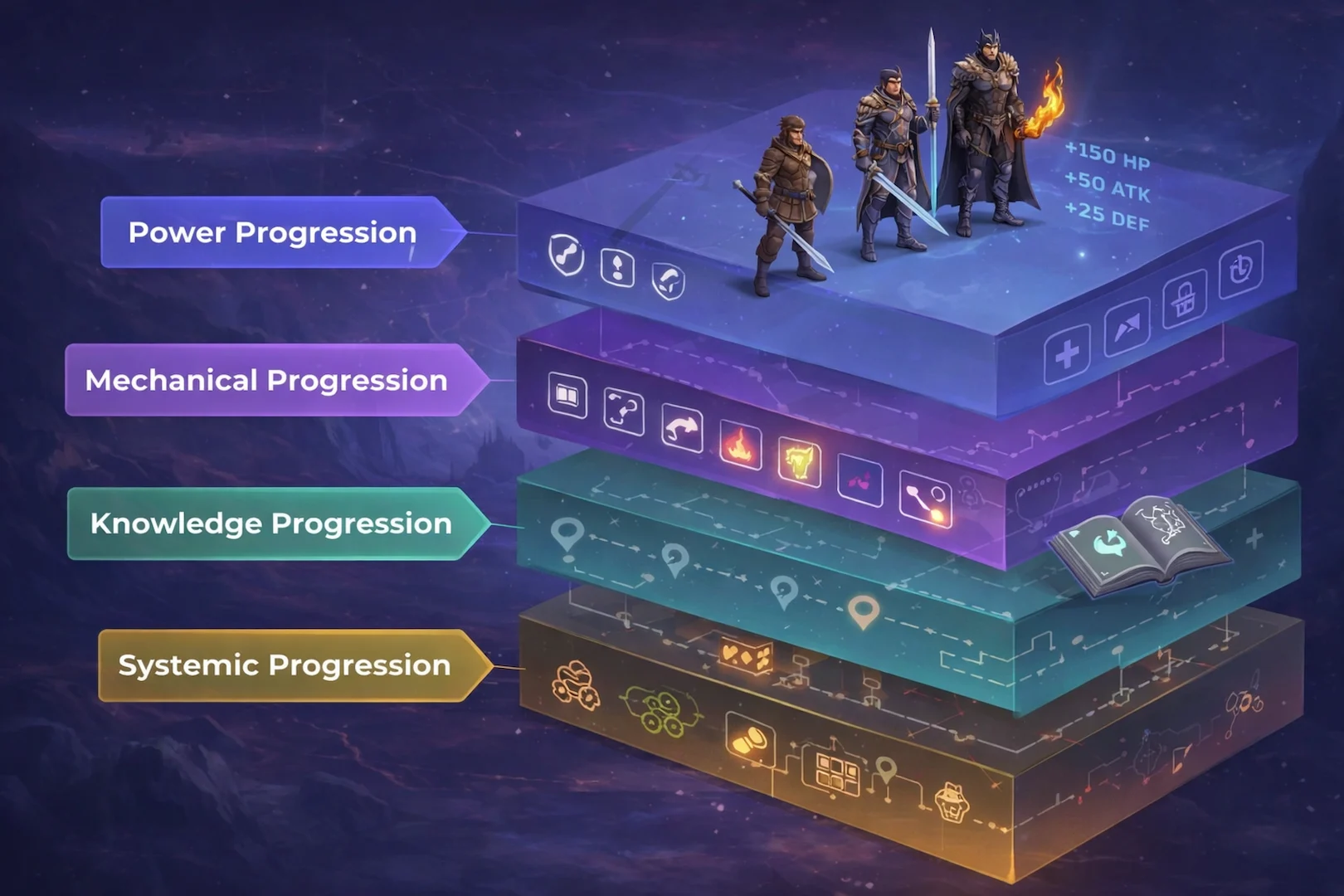
Although the term progression system is often treated as if it describes a single design logic, in practice there are several different forms of progression, each with a distinct role and a different impact on player experience.
The most recognizable form is numerical or power progression. This is where the player becomes stronger through statistical growth, gear upgrades, or increased core performance values. Progress becomes immediately visible because it translates into measurable change against challenge. Yet even here, successful progression depends not simply on numbers increasing, but on whether those increases actually alter strategic relationships. Alongside this sits mechanical progression, where evolution is not primarily about power, but about new functional possibilities. Here, the game introduces abilities, tools, or mechanics that reshape movement, interaction, or obstacle solving. A new traversal ability, for example, may completely alter spatial reading, while a new combat mechanic can create entirely different tactical decision-making.
There is also knowledge progression, one of the most interesting yet least visually obvious forms. In this case, the system itself may remain largely unchanged, but the player’s understanding evolves. Progress comes through observation, system literacy, and accumulated comprehension rather than external rewards. Another form is systemic progression, where evolution emerges through gradual exposure to additional layers of complexity. The game does not simply add content, but reveals deeper relationships between systems and increases the density of decision-making.
Some games also rely heavily on spatial or narrative progression. Access to new areas, new social structures, altered player status within the world, or changes in narrative position all function as progression even when they are not accompanied by visible mechanical rewards. Most mature games combine several of these forms simultaneously. Players gain strength, unlock mechanics, deepen understanding, and move into greater systemic complexity at the same time. When this happens coherently, progression gains real depth. When done poorly, it becomes a sequence of disconnected rewards.
The Major Trap of False Progression
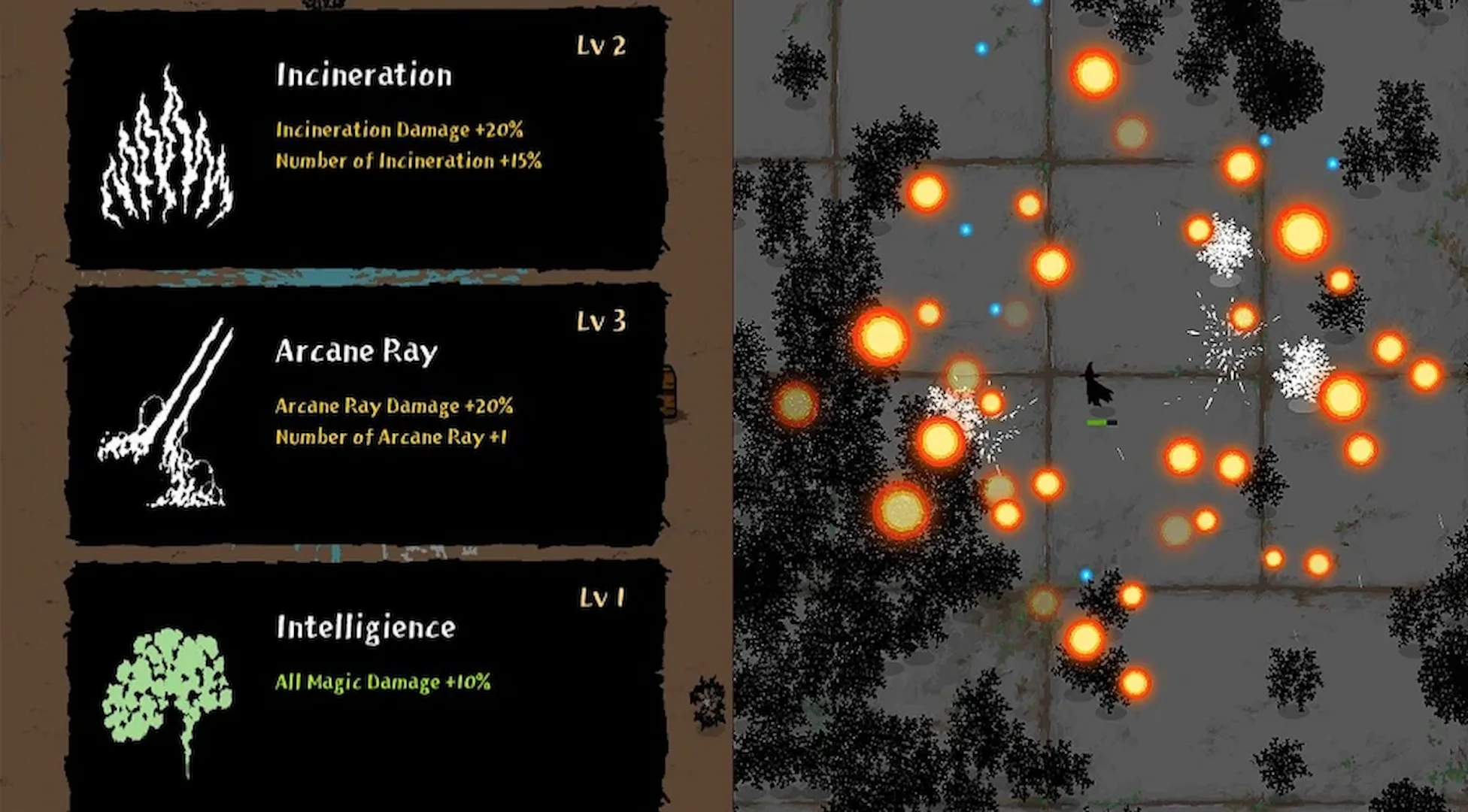
One of the most common problems in modern game design is that many games create the impression of progression while the experience itself remains largely unchanged. This is false progression: a form of advancement that functions superficially without meaningfully changing the player’s relationship with the system. False progression appears when rewards, unlocks, or numerical increases continue to arrive, but none of them meaningfully alter decision-making or systemic interaction. Bars fill, levels rise, inventory expands, yet the underlying gameplay remains functionally identical. The most common version appears when numerical growth is not accompanied by strategic change. If a weapon deals slightly more damage but every encounter is still approached in exactly the same way, the increase has limited design value.
The same applies to skill trees that visually appear rich but offer mostly passive bonuses without meaningful gameplay divergence. The player feels they are investing, but the game never asks them to rethink how they play. False progression often reveals itself slowly. In early hours it works because every reward still carries anticipation. Over time, however, players realize that beneath continuous rewards there is no meaningful transformation. A truly functional progression system does not merely offer more. It ensures that what is offered changes the architecture of choice.
The Relationship Between Progression System, Pacing, and Duration in Game Design
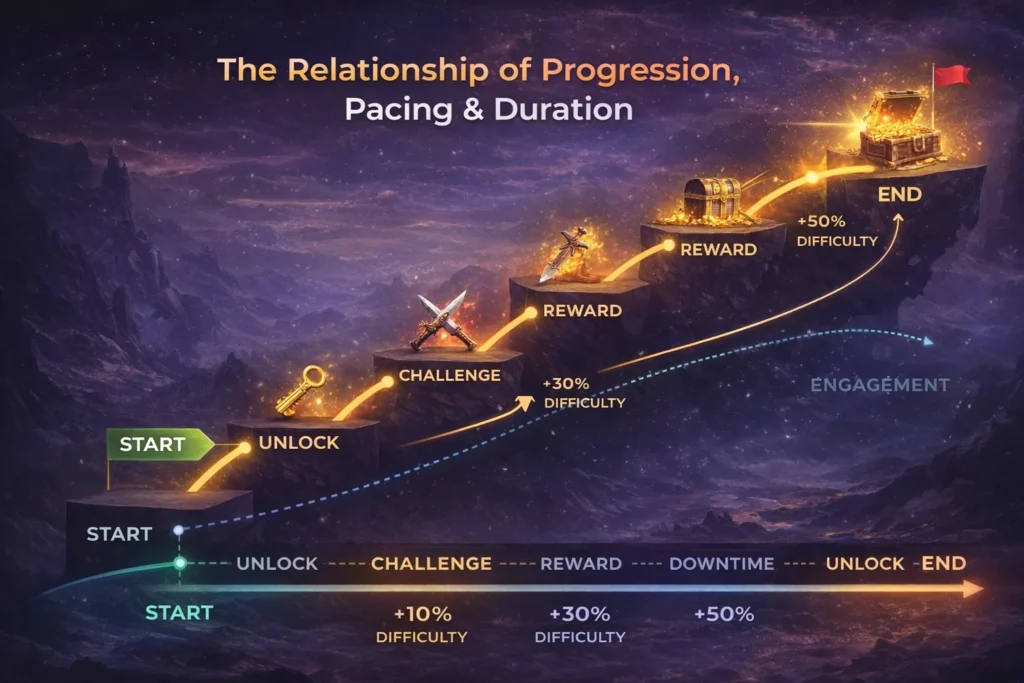
Progression does not operate independently from a game’s overall pacing. On the contrary, it is one of the primary mechanisms through which design controls intensity, expectation, difficulty, and renewal across time. The timing of each unlock, ability, enhancement, or added complexity directly affects how the player experiences flow. If new possibilities arrive too quickly, the system risks exhausting its own potential too early. If progression arrives too slowly, stagnation emerges.
This is why in carefully designed games progression is distributed with precision. The system always leaves something meaningful ahead, something the player senses is coming without receiving it prematurely. Progression also must align with difficulty. A new ability has little design value if introduced when the game does not yet require it, or if challenge does not evolve in ways that justify its existence. In this sense, progression functions as the game’s internal metronome. It determines when the experience breathes, when demands rise, when reward appears, and when focus shifts again.
The Psychology of the Player Inside a Progression System
Progression is not only a technical mechanism but also one of the strongest psychological tools in game design. Players do not continue simply because rewards exist, but because the system creates the expectation that the next step may matter. A well-designed progression system operates across multiple psychological layers. At an immediate level, players need frequent small confirmations that their effort matters. At a medium-term level, they need visible next targets. At a long-term level, they need to feel that their position within the game is fundamentally changing.
Without that larger sense of transformation, progression becomes only a mechanical chain of rewards without emotional weight. This is also why player ownership matters. The more progression reflects personal choice rather than purely predefined flow, the stronger the psychological connection becomes. Why Progression Is Not Simply Skill Trees and Levels One of the most common mistakes in discussing progression is reducing it automatically to skill trees, levels, and numerical upgrades. These are common tools, but they are not progression itself.
A skill tree can be excellent or completely weak depending on whether its choices generate meaningful gameplay divergence. Levels only matter if they create new demands and altered strategic conditions. Some games achieve exceptional progression while relying very little on traditional leveling structures. In these cases, progression emerges through mastery, knowledge, and system reinterpretation. This shows that real progression is not located in the interface, but in the changing relationship between player and system.
Why Progression Systems Are Not Simply Skill Trees and Levels
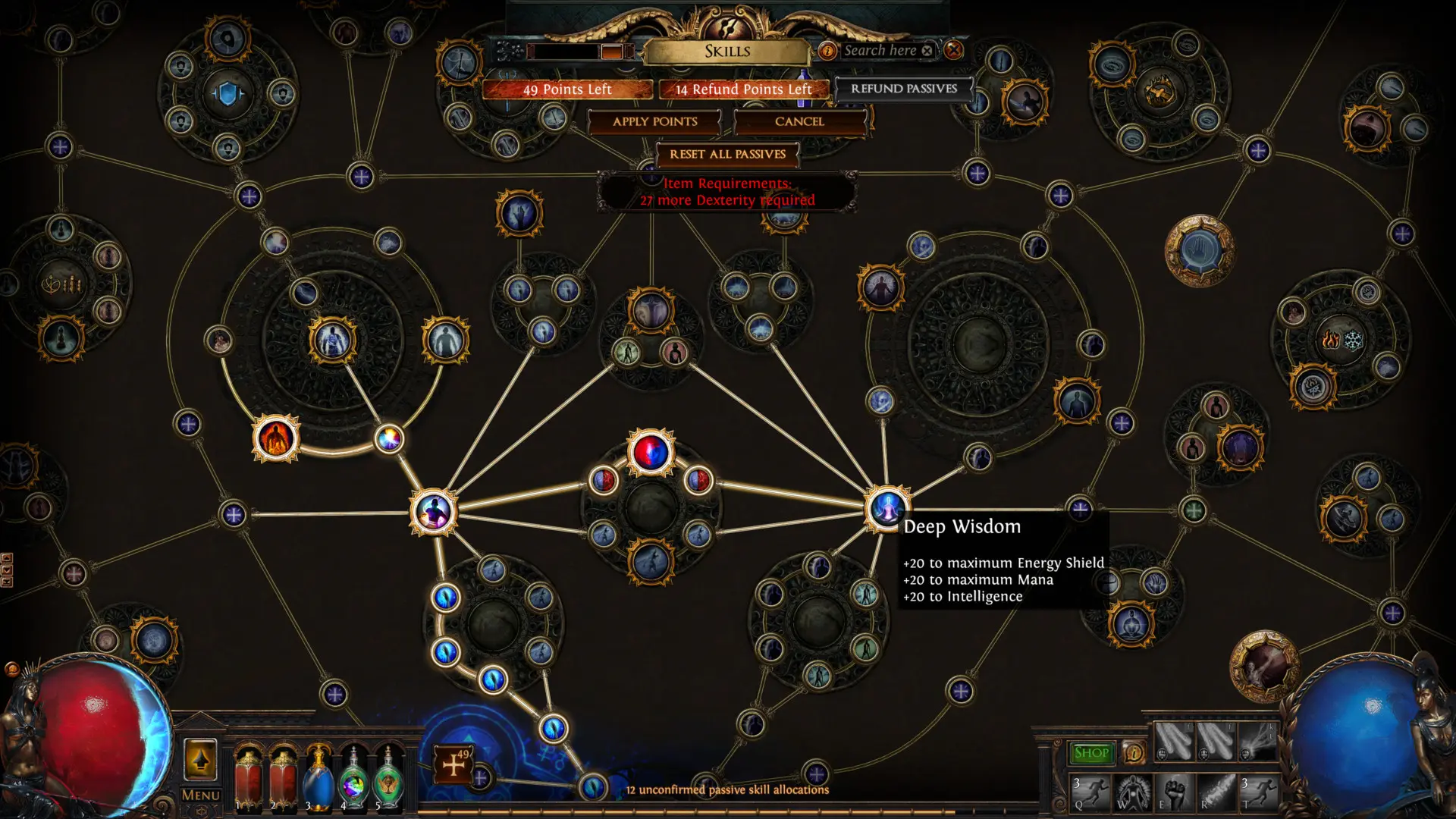
One of the most common mistakes in discussions around progression systems is that the concept is almost automatically reduced to skill trees, levels, and numerical upgrades. These are indeed widely used progression tools, but they are not equivalent to progression itself as a design concept. They are simply individual structures through which a game may organize player advancement, not the definition of progression on their own.
A skill tree, for example, can be exceptionally well designed or entirely weak depending on whether the choices it offers generate genuine gameplay differentiation. If most options merely provide small passive increases without altering the way decisions are made, then the tree functions more as an illusion of complexity than as a meaningful progression mechanism. The player invests points, yet the experience remains largely unchanged. The same applies to levels. Level increases can work effectively when they are accompanied by meaningful changes in demands, access, or available choices. But if each level simply results in gradual numerical improvement without any corresponding shift in how the game reacts or requires strategic adaptation, then progression remains superficial. The number rises, but the experience does not gain new depth.
There are even games that achieve exceptional progression while relying very little on traditional levels or trees. In such cases, progression is built through knowledge, mastery, or the gradual revelation of mechanics. The player evolves because they begin to understand the system more deeply, recognize patterns that were previously invisible, or use existing tools in fundamentally different ways. This demonstrates that true progression does not exist in the interface itself, but in the changing relationship between player and system. The UI may display bars, numbers, unlocks, and options, but if the underlying nature of decisions does not change, progression remains limited.
In its mature design form, a progression system gains value when each new phase of a game forces the player to readjust the way they think. New possibilities should not simply be added as extra options, but should alter the architecture of the experience itself. That is where progression acquires real design function. For that reason, the central question in any progression analysis is not how many levels exist, how many upgrades a game provides, or how large a skill tree may be. The critical question is whether, as time passes, the game asks the player to operate differently within the same system. If the answer is yes, then real progression exists. If not, even the most visually impressive progression interface remains design-wise shallow.
Conclusion
The progression system is one of the most essential mechanisms in modern game design because it determines whether a game remains alive as an experience as hours pass or reveals its limits too early. It is not simply about rewarding time investment, but about how design gradually changes the player’s relationship with mechanics themselves. Its true value is not found in numbers or unlocks alone, but in whether each new phase meaningfully changes how the player thinks, decides, and manages the systems in front of them.
When progression is designed correctly, it functions as a mechanism of gradual transformation. The player does not merely feel stronger, but fundamentally different in relation to the same game. That is why progression cannot be treated as an isolated feature. It is directly connected to combat, economy, AI, pacing, world disclosure, and overall structural duration. Within the Systems & Mechanics pillar, progression demonstrates clearly that evolution in a game is never simply a matter of content. It is a matter of architecture.