
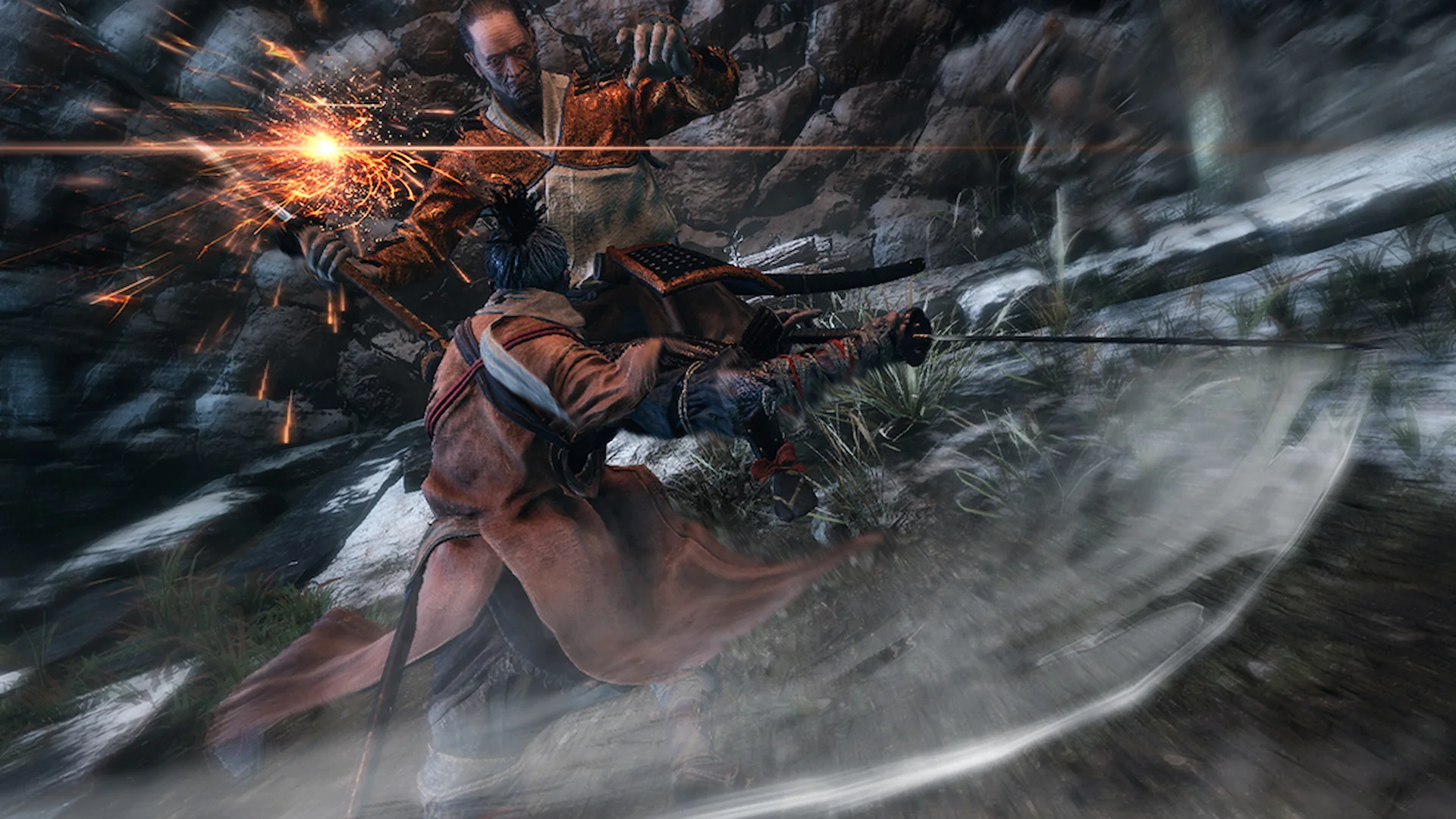
Within the broader framework of the nine core pillars of game design—and more specifically within the Player Agency & Control pillar—Counterplay Options represent the final and decisive component that closes the loop of active player participation within the system.
If the preceding components define what the player can do, how they commit to their choices, and how they gain ownership over their playstyle, counterplay determines whether the game allows them to respond meaningfully when situations turn against them.
Counterplay is not about ease.
It is about the ability to react.
It has nothing to do with power fantasies or “second chances,” but with whether the system acknowledges failure as a core part of the gameplay loop and provides the player with tools to manage it—without undermining challenge.
What Counterplay Options Are—and What They Are Not in Game Design
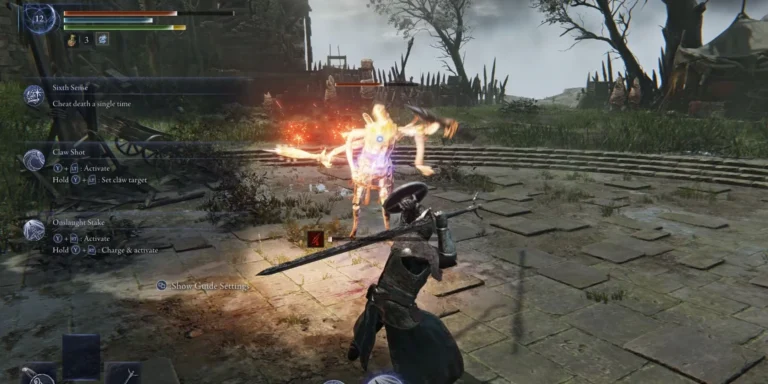
At a game design level, counterplay means that for every meaningful pressure exerted by the system, there is at least one active response path available to the player. This does not imply that all responses are always accessible, nor that they are equally effective. It means that failure is not a final verdict imposed by the system, but the outcome of decisions, timing, and understanding.
Counterplay is not synonymous with difficulty sliders, panic-button consumables, or mechanics that simply negate risk. When a system allows the player to bypass challenge without cost, it does not offer counterplay—it offers escape.
Counterplay as a Systemic Promise
Any game that asks the player to take risks, commit to builds, and accept consequences is obligated to provide corresponding channels of response. Counterplay functions as an implicit contract between designer and player: the system will be demanding, but not arbitrary.
This promise breaks when the player is punished without the ability to read or respond. When death, failure, or resource loss occur through unpredictable or unanswerable situations, agency collapses.
Forms of Counterplay Within the Gameplay Loop
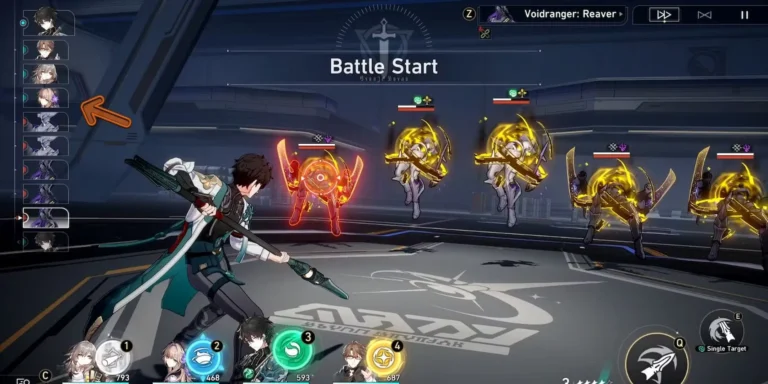
Counterplay can manifest across different layers of the gameplay loop.
At the tactical level, it concerns moment-to-moment decisions: positioning, timing, resource spending, target prioritization.
At the strategic level, it involves build adjustments, shifts in approach, and risk reassessment.
At the meta level, it relates to system knowledge and anticipation of future threats.
Crucially, counterplay does not need to be symmetrical. It does not require equal tools for every threat. It only requires a clear conceptual link between cause and response.
Counterplay and System Readability
Without animation readability, counterplay cannot exist. A player cannot respond to what they cannot understand. Telegraphs, cues, delays, and audiovisual indicators are not cosmetic elements—they are foundations of player agency.
When a game expects the player to react, it must first enable prediction. Counterplay fails when information arrives after punishment, or when indicators are not clearly connected to outcomes.
The Relationship Between Counterplay and Build Diversity
Counterplay is not independent of build design. A healthy system supports different responses depending on playstyle. A defensive character and a high-risk build should not counter threats in the same way—but both must have options.
When only specific builds possess reliable counterplay, the meta locks. All other choices become traps. Such systems undermine both build ownership and the very purpose of diversity.
Counterplay, Cost, and Trade-offs
Every form of counterplay must carry a cost. Without cost, a response becomes the default option. Cost may take the form of resources, cooldowns, exposure to risk, or long-term consequences. What matters is that the player is asked to weigh options, not to activate safety mechanisms.
Counterplay rooted in trade-offs reinforces decision-making and engagement. Counterplay based on automatic danger negation removes tension.
Counterplay Failure and Artificial Difficulty
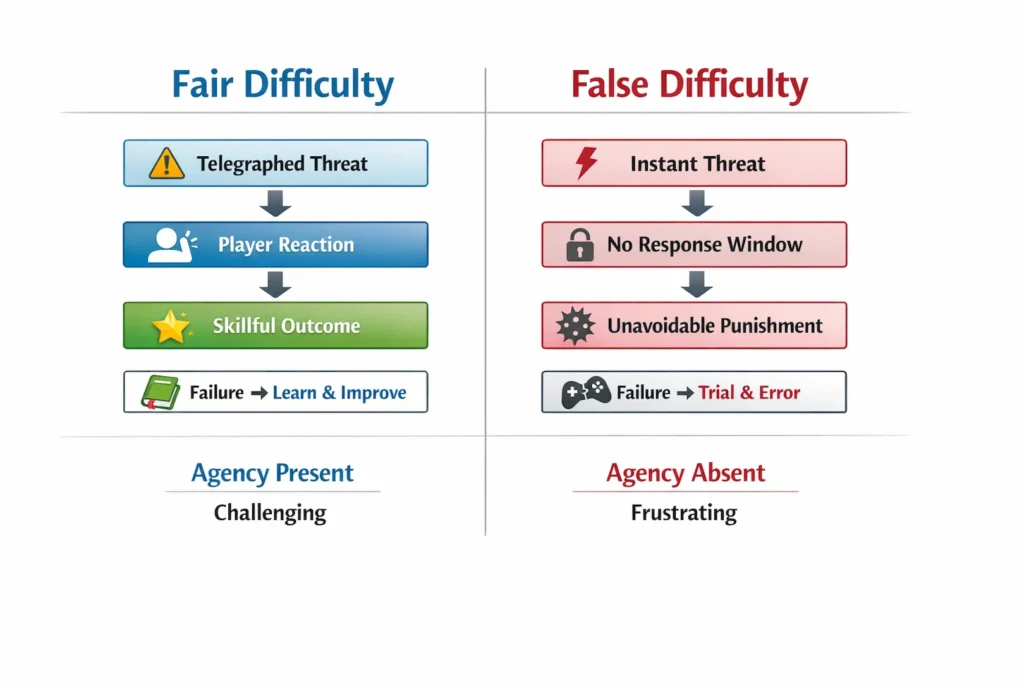
The absence of meaningful counterplay is often mistaken for increased difficulty. In reality, it is artificial difficulty. When a system punishes without allowing response, it does not test skill—it tests patience.
Games built on such practices may appear demanding, but they fail at the level of agency. The player does not feel they lost because they played poorly, but because the system denied them the space to play better.
Counterplay in Relation to Other Player Agency & Control Components
Counterplay Options function as a balancing mechanism for all preceding components in game design. Without counterplay, meaningful choices become dead ends. Constraints turn into walls. Consequences stop being educational and become purely punitive.
For the game designer, counterplay is not a feature to be added—it is a quality indicator of the system itself. Where clear counterplay exists, there is room for learning, improvement, and genuine agency.
Counterplay as a Marker of Respect for the Player
Counterplay does not make games easier. It makes them fairer. It signals that the system respects the player’s time and cognition, allowing failure to carry meaning. When counterplay is present, failure becomes a learning tool rather than a point of friction.
As the final component of the Player Agency & Control pillar, Counterplay Options act as a cohesion test for the entire design structure. When absent, the pillar weakens. When properly integrated, it locks in the sense of control and responsibility that defines agency.