
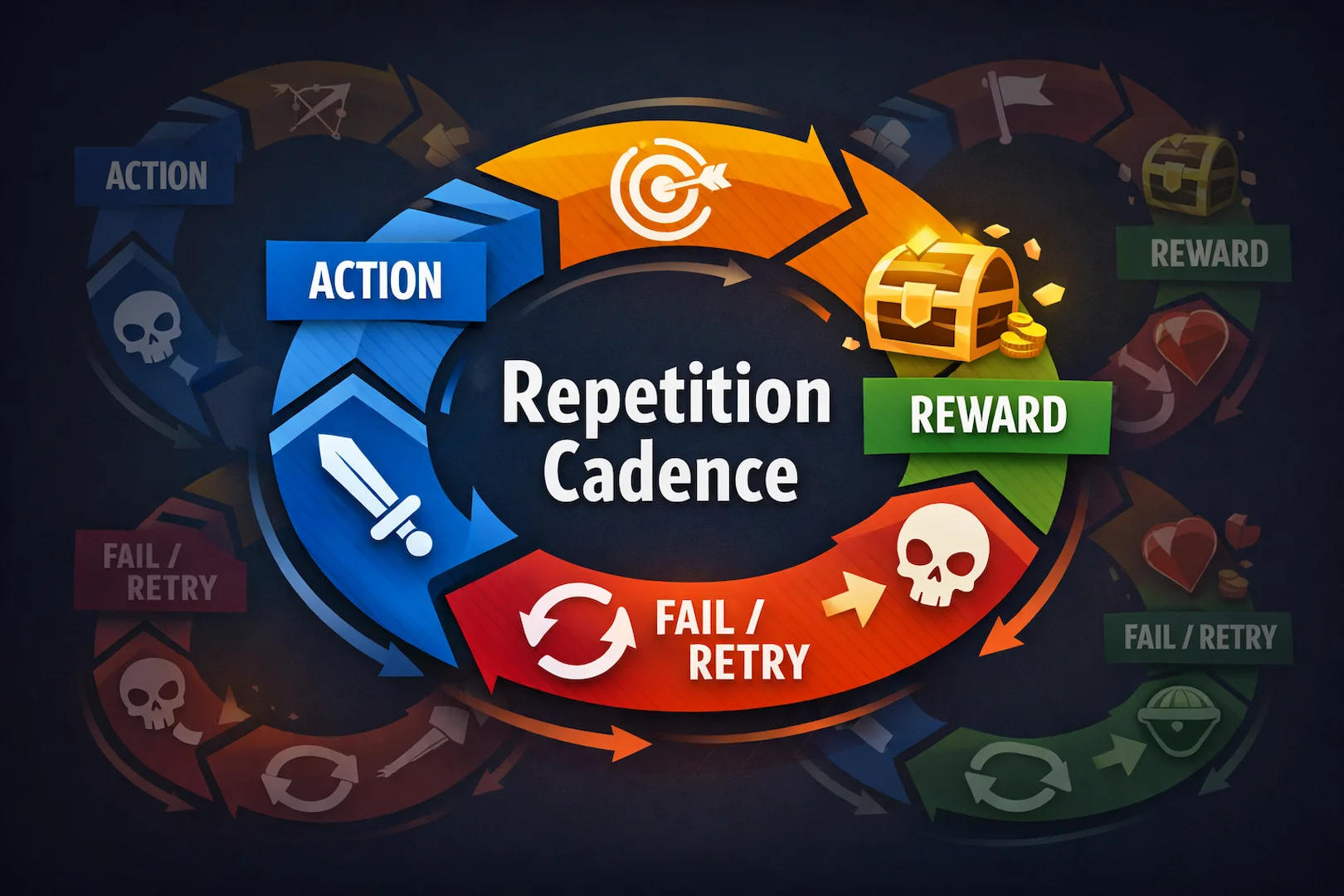
Once we clearly define what the player can do (Player Actions), what they aim to achieve (Primary Objectives), what they gain upon success (Reward Cycle), and what happens when they fail (Fail States), a critical question remains—one that ultimately determines whether a game can sustain engagement over time: how and when all of these elements repeat. This is where Repetition Cadence becomes central to game design.
Repetition Cadence is not about whether repetition exists—repetition is inherent to every interactive system. Instead, it concerns when, how often, in what form, and with what variation repetition occurs. It is the mechanism that transforms a core gameplay loop from mechanical routine into a sustainable experience. Without proper cadence, even well-designed systems collapse into monotony, fatigue, or chaos.
Within the framework of the nine core pillars of game design, Repetition Cadence acts as connective tissue. It is not an isolated system but rather the regulator of all others. If the pillars define structure, cadence defines the pulse.
What Repetition Cadence Means in Game Design
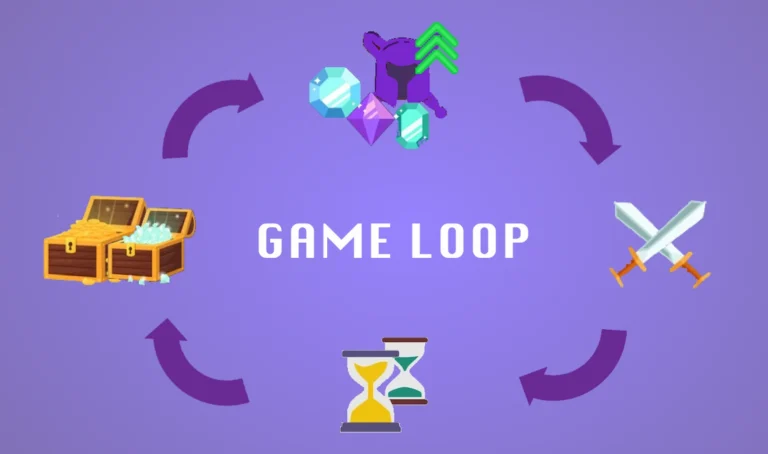
Repetition Cadence is the designed rhythm governing how player actions, objectives, rewards, and fail states repeat and evolve over time. This is not simply about frequency, but about rhythmic structure.
Like music, repetition without variation becomes tiresome, while variation without recognizable patterns becomes disorienting.
From a design perspective, cadence answers questions such as:
- How often does the player perform the same core action?
- How quickly does the experience return to familiar patterns after a climax or failure?
- When should small deviations appear, and when should major shifts occur?
- How does tension escalate or decompress over time?
Cadence defines how repetition feels, not merely how often it happens.
Repetition Does Not Mean Monotony
One of the most common design mistakes is equating repetition with boredom. Repetition is unavoidable. What causes fatigue is static repetition without contextual evolution.
Repetition Cadence allows actions to remain recognizable without becoming identical. The same player action can feel fresh when:
- Context changes
- Stakes evolve
- Player knowledge increases
- Failure cost shifts
- Reward structure changes
In this way, repetition becomes a tool for learning and mastery rather than a chore.
Repetition Cadence and Player Actions
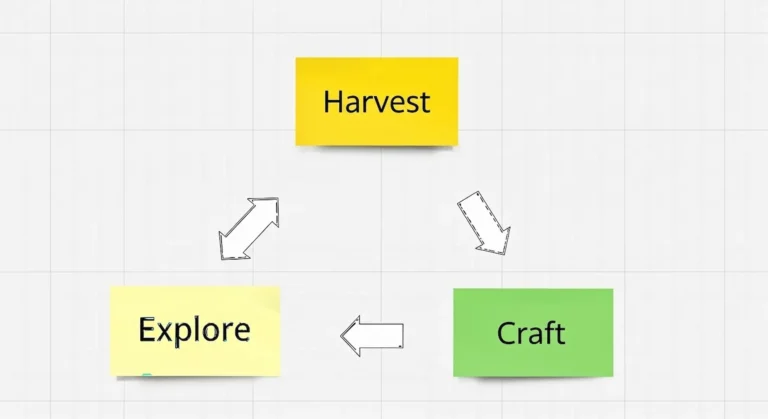
Player Actions are the first layer where cadence operates. Core actions must recur frequently enough to build familiarity and muscle memory, but not so frequently that they become mentally exhausting.
Proper action cadence:
- Enables rapid understanding
- Supports gameplay flow
- Builds trust in input-output systems
- Prepares players for more complex combinations
Poor cadence leads either to boredom through stagnation or confusion through constant novelty without assimilation time.
Repetition Cadence and Primary Objectives
Primary Objectives define the macro rhythm of gameplay. Here, cadence governs how often objectives change and how their structures repeat.
Effective cadence:
- Reintroduces familiar objective types
- Adds gradual variation
- Alternates between short and long-term goals
- Creates predictable cycles of tension and release
If objectives change too rapidly, players cannot internalize systems. If they never change, gameplay devolves into checklist execution.
Repetition Cadence and the Reward Cycle
The Reward Cycle is directly shaped by cadence. The timing and escalation of rewards define engagement momentum.
Strong reward cadence typically includes:
- Frequent small rewards to maintain flow
- Larger rewards spaced out for emotional peaks
- Delayed gratification when tension is required
- Controlled reward bursts for excitement
When cadence fails, rewards either lose value due to oversupply or cause frustration due to excessive delay.
Repetition Cadence and Fail States
Fail States act as interruptions within cadence. How often failure occurs—and at what cost—significantly affects pacing.
Effective failure cadence:
- Allows frequent low-cost failure early on
- Gradually increases risk and consequences
- Provides recovery windows
- Avoids consecutive high-penalty failures
Too frequent severe punishment breaks engagement, while the absence of failure removes tension entirely.
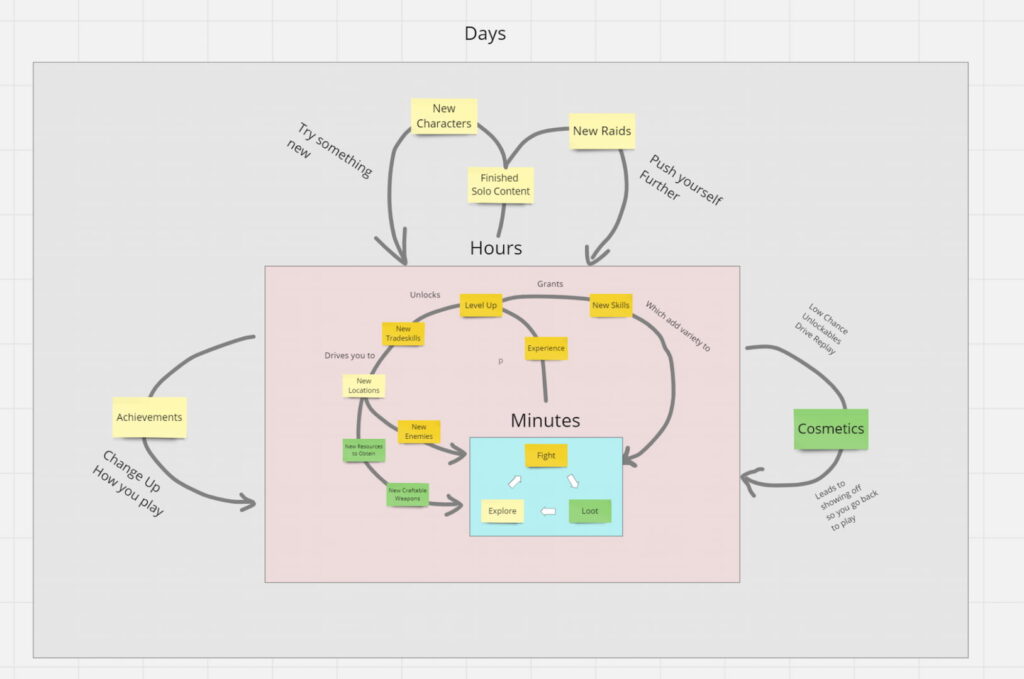
Micro Cadence vs Macro Cadence
Repetition Cadence operates on two primary levels.
Micro cadence governs seconds or minutes: action frequency, feedback timing, minor rewards.
Macro cadence spans hours or the full game: acts, chapters, progression arcs, and difficulty curves.
A common design error is optimizing one level while neglecting the other. Strong micro pacing cannot compensate for poor macro structure, and vice versa.
Cadence, Learning Curves, and Mastery
Cadence is deeply connected to how players learn.
Effective cadence supports learning by:
- Allowing repetition without heavy punishment early on
- Introducing variation once familiarity forms
- Increasing pressure only after mastery emerges
In this way, games teach through rhythm rather than tutorials.
Repetition Cadence as a Pacing Tool
Pacing is not a separate system—it is the experiential result of cadence.
Players perceive gameplay as flow, not mechanics. Cadence determines:
- When tension rises
- When pressure drops
- When comfort emerges
- When challenge returns
Poor cadence produces either flat experiences or constant burnout.
Repetition Cadence and Genre Expectations
Cadence varies significantly across genres, as each genre carries different expectations regarding repetition and rhythm.
- Action-heavy games rely on rapid action repetition and high feedback frequency.
- Strategy and management games operate on slower, deeper decision cycles.
- Narrative-driven experiences alternate mechanical repetition with story progression to avoid stagnation.
The issue is not repetition itself, but mismatch between cadence and genre expectations. When rhythm conflicts with genre identity, games feel either exhausting or empty.
Repetition Cadence, Session Design, and Retention
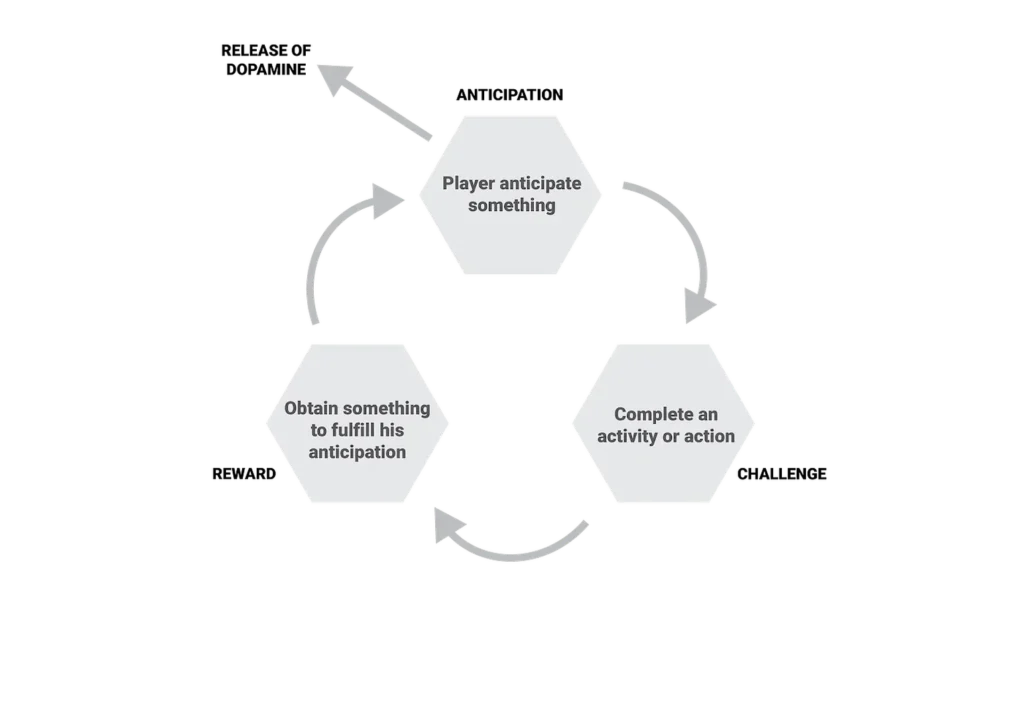
From a production perspective, cadence shapes how play sessions function. It influences whether a game supports short recurring sessions or long uninterrupted play.
Proper cadence:
- Allows players to enter and exit without losing meaning
- Creates natural stopping and return points
- Sustains loop continuity across sessions
Poor cadence either cuts sessions abruptly without satisfaction or stretches them to the point of fatigue.
Retention, in this context, emerges from natural flow rather than artificial retention mechanics.
Expected Repetition vs Perceived Repetition
One of the most subtle aspects of cadence lies in the difference between actual repetition and perceived repetition.
Players may repeat identical actions dozens of times without noticing if context, stakes, or information evolve. Conversely, even minimal repetition feels tedious if meaning remains unchanged.
Repetition Cadence must therefore manage perception, not merely reduce repetition. The goal is familiarity without predictability.
Conclusion
Repetition Cadence is one of the most underestimated yet critical components of game design. It is rarely visible but immediately felt when absent. It regulates how Player Actions, Objectives, Rewards, and Fail States function together over time.
Within the framework of the nine core design pillars, cadence is not merely another axis—it is what transforms structural systems into lived experience.
When cadence works, games endure. When it fails, no system can compensate.